Journal
Why Do Chinese People Drink Hot Water?
Fuel scarcity, boiling campaigns, and the old warm-versus-cold body idea explain China's hot-water habit — a cultural custom, not a medical prescription.
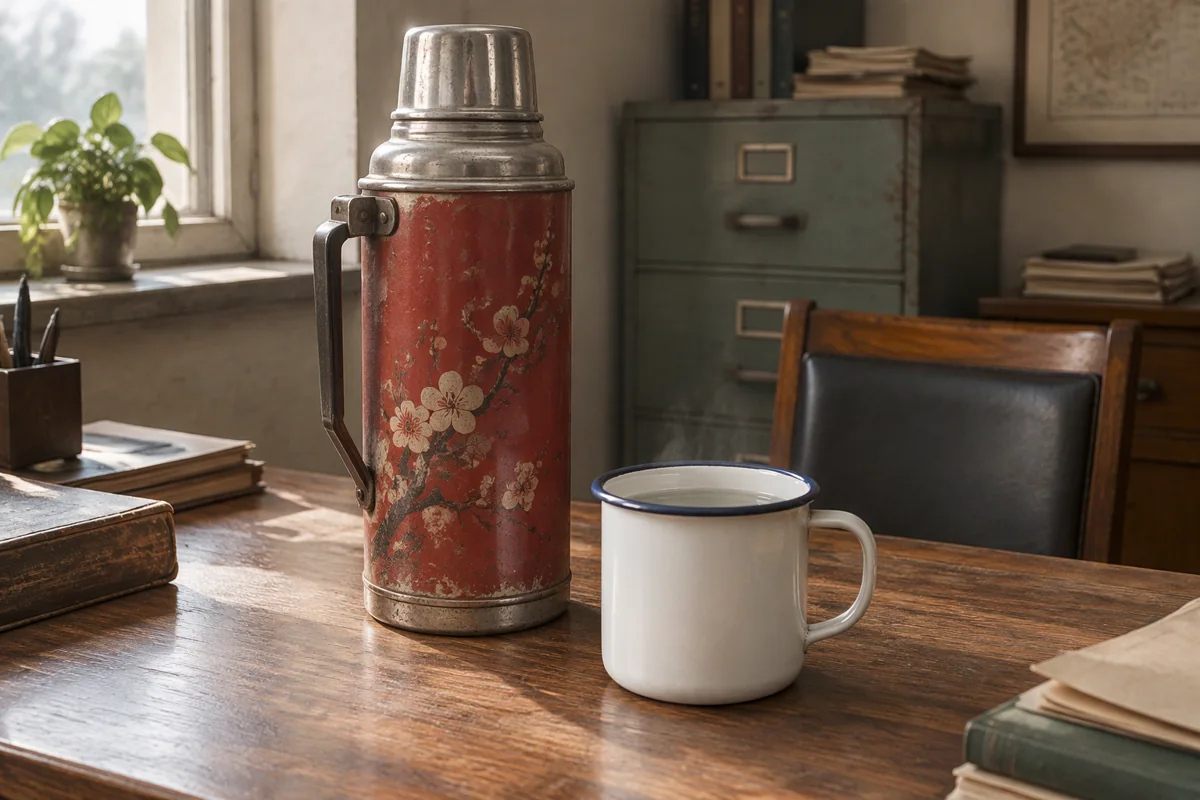
A visitor in a Chinese office notices the thermos before the org chart. It sits on desks, gets refilled from a kettle, and travels to meetings. The drink is plain hot water, and the reasons behind it are less medical than practical: fuel, plumbing, and a century of official instruction.
A Habit That Is Younger Than It Looks
It is tempting to file hot water under “ancient Chinese tradition.” The historical record is more specific. Iced drinks were not unknown; they were expensive and largely reserved for the elite. During the Zhou dynasty, court staff were assigned to harvest and store winter ice. In humid southern cities, cold drinks were a seasonal luxury rather than an everyday habit.
The mass habit of drinking plain hot water is largely a twentieth-century development. It grew from a mixture of scarcity, public hygiene, and a cultural vocabulary that already treated temperature as meaningful.
Fuel, Ice, and the Economics of a Warm Drink
Fuel was expensive for most households. Keeping a fire going to boil a kettle cost money or gathered wood, and ice was difficult to make and store without refrigeration. In that setting, hot water was a luxury item, often reserved for pregnant women, the elderly, and people who were already unwell.
By the 1830s, prosperous parts of the Yangtze Delta had turned hot water into a small industry. Shops known as laohuzao, or “tiger stoves,” sold hot water by the jug, for drinking and for washing. The habit spread through cities where fuel was scarce and households were crowded.
A thermos changed the arithmetic. Once vacuum flasks became common in the twentieth century, a single boil could supply a family for a day. The thermos is not a decorative symbol of Chinese-ness; it is the piece of equipment that made the habit convenient.
The Public Hygiene Campaign That Made It Normal
The strongest push came from government. In 1934, the Nationalist government launched the New Life Movement, which included instructions on dress, eating, housing, and drinking boiled water. The message was framed around bacteria and intestinal illness: boiling was a way to make uncertain water safer.
After 1949, the new government carried the same message further. Cadres who moved around the country brought their enamel mugs and their preference for hot water with them. In 1952, the Patriotic Health Campaign again promoted boiled water, with school slogans urging children to drink it three times a day.
The results were uneven. Many households lacked fuel or time, and rural areas and southern provinces kept their own drinking customs. But over several decades, the combination of public instruction and unreliable tap water made “drink boiled water” a default rule that parents passed to children. When people say the habit is about hygiene, this is the history they are remembering.
The Body-Frame Explanation
Alongside the hygiene story runs an older vocabulary. Traditional Chinese medicine has classified drinks as warming or cooling since at least the fourth century BCE. Hot water was understood as warming, useful for “expelling cold and dampness” and protecting the middle of the body. Cold drinks were thought to shock the system, particularly for people with a “cold” constitution.
This is a framework for describing balance, not a laboratory result. It explains why the same advice can sound obvious to one person and strange to another: the two are using different maps. The cultural instruction is essentially “keep the middle warm,” and hot water is the easiest way to follow it. A bowl of soup, a cup of tea, or a foot bath can serve the same idea.
The old rule is not “hot water is medicine.” It is “keep the middle warm and avoid a shock of cold” — a description of balance, not a clinical finding.
What It Looks Like in Practice
The habit shows up in small domestic scenes. A kettle stays warm on the counter. A bottle is filled before a commute. Offices provide a water dispenser with a hot tap. Restaurants bring hot water or tea without asking, and older relatives remind younger ones to drink something warm after sweating or after getting rained on. “Drink more hot water” functions as a mild expression of care, close in tone to “get some rest.”
The habit is not universal. Younger urban Chinese drink iced coffee, bubble tea, and bottled water, especially in summer. Southern households may keep a pot of cooling herbal tea in the refrigerator. Regional and generational differences are large enough that any sentence beginning “Chinese people always” is already wrong.
What remains fairly constant is the thermos, the kettle, and the assumption that a warm drink is the polite default. Tea extends the same gesture: leaves change, the temperature does not.
What This Article Is Not
None of this makes hot water a remedy. The history explains why the habit exists and why it feels natural to people who grew up with it. It does not establish that warm water improves digestion or circulation, or that it protects anyone from illness, and this site does not make those claims.
If you try the habit, the practical rule is simple: let the water cool until it is pleasant to sip. Boiling water straight from the kettle can scald. A mug of warm water is a small ritual, and a ritual is allowed to be just a ritual.