
Journal
Is Hot Water Actually Good for You?
Warm water has real cultural weight but thin evidence. We read the motility and cardiovascular studies closely and separate small lab results from daily-habit claims.
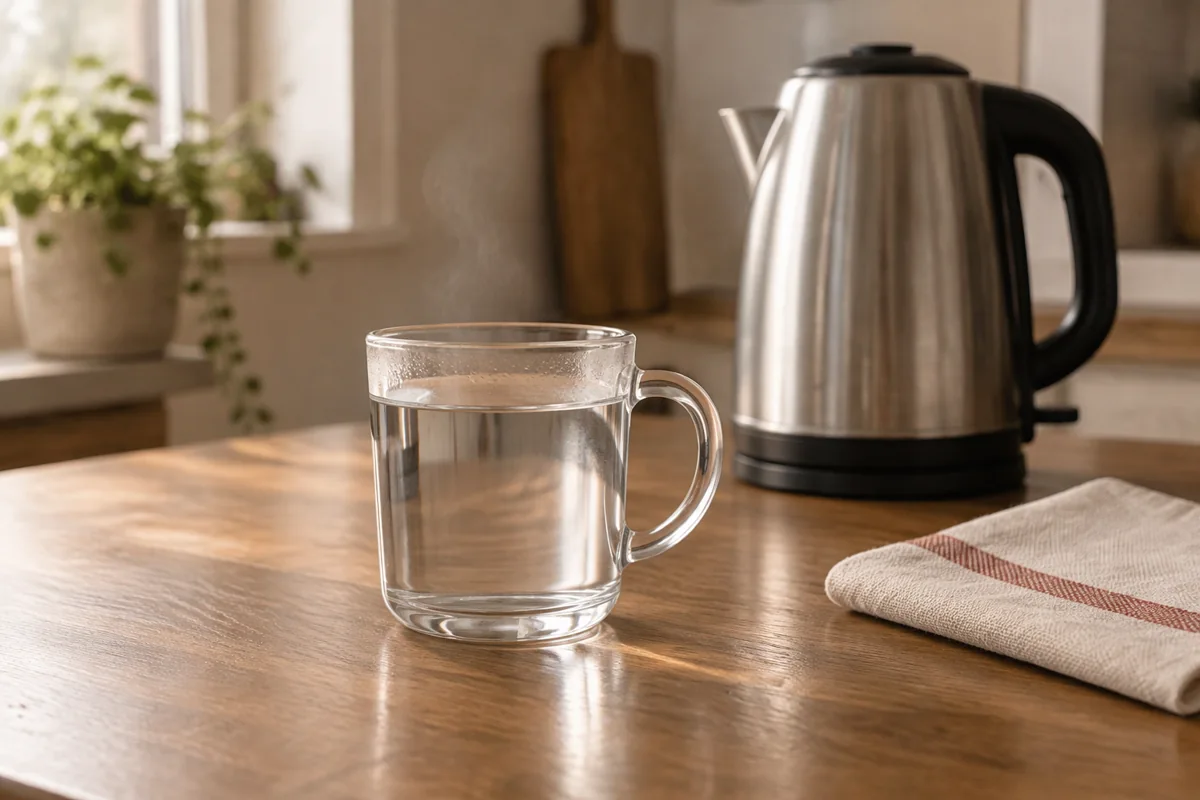
Search for hot water and you find two kinds of pages: ones that promise better digestion, calmer nerves, and easy weight loss, and ones that dismiss the whole idea as folklore. The research is narrower than either side suggests.
The Question Under the Habit
People are usually asking one of two things. Does drinking warm water do something measurable to the body? And if it does, is that something worth building a habit around? The first is a physiology question with a small literature. The second is personal, and the evidence does not settle it.
What Warm Water Does Not Do
Plain water is water. It does not flush “toxins” from the body; the liver and kidneys handle waste continuously, and no drink changes that in a meaningful way. It does not reset digestion or “wake up” the stomach. It does not strengthen the immune system. Claims in that direction usually describe how a drink feels, then borrow the language of medicine to make the feeling sound like a mechanism.
Warm water can be pleasant. That is a real effect, and it is not nothing: a warm drink is comforting on a cold morning, and comfort is a legitimate reason to drink one.
What the Two Key Studies Actually Measured
Two papers are cited often enough that they are worth reading directly.
Gastric motility and the next meal
One study looked at water temperature, stomach activity, and how much food eleven young men ate afterward. Each man came to the lab three times, fasted overnight, and drank 500 milliliters of water at 2 °C, 37 °C, or 60 °C. Researchers then used ultrasound to watch the stomach and served a meal until the men felt full.
The result did not support the usual claim about warm water. The cold-water trial was followed by 19 percent less energy intake than the body-temperature trial, and 26 percent less than the 60 °C trial. Stomach contractions were also less frequent after cold water. The authors suggested that cold water might affect appetite through gastric motility.
That is an acute laboratory finding in eleven healthy young men, over one morning. It says nothing about what a daily warm-water habit does across months, and it points in the opposite direction from the folklore.
Heart rate and energy use over ninety minutes
A second study gave 500 milliliters of tap water at 3 °C, 22 °C, and 37 °C to twelve young adults and tracked heart rate, blood flow, and energy expenditure for ninety minutes. Cold and room-temperature water lowered heart rate and increased stroke volume; body-temperature water did not produce those changes. Cold and room-temperature water also raised energy expenditure by roughly 2 to 3 percent over the observation window.
Again, the effects were short-term, in a small group of healthy young people. The study is interesting for physiology. It is not a case for drinking hot water, and it is not a case against it either. Nothing here describes a benefit that would accumulate into better digestion or a leaner body.
Temperature Safety Is the One Clear Practical Point
The useful finding in all of this is about heat, not magic. Very hot drinks can burn the mouth and throat, and repeated thermal injury is a recognized concern in research on very hot beverages. A drink at 60 °C is hot enough to hurt; boiling water is far past that.
The practical rule is unglamorous: pour, wait, sip. If the cup is too hot to hold comfortably against your lip, it is too hot to drink. Adding a slice of lemon or a spoon of honey does not change that.
Where the Evidence Is Thin
Most of the research looks at water temperature over minutes or a single meal. It rarely follows people long enough to say anything about habits. It often studies young, healthy men. It rarely separates plain water from tea, soup, or the cultural expectations that come with them. And it is easy to overread: a change in heart rate over ninety minutes is a physiological response, not a promise about long-term wellness.
There is also a definition problem. “Warm” means different temperatures in different studies: 37 °C, 40 °C, 60 °C. A finding at body temperature does not transfer to a cup of near-boiling water, and vice versa.
Three questions sort most headlines quickly. Who was studied, and for how long? Eleven men in one lab session is a mechanism study, not a lifestyle trial. What was compared? If the comparison is cold water against body-temperature water, the result may say more about cold than about heat. And what is being sold? Supplements, kettles, and wellness programs all have an interest in making a simple drink sound like a system.
A Reasonable Conclusion
Warm water is safe when it is not scalding, it is culturally meaningful to a lot of people, and it is pleasant on a cold day. The evidence does not show that it fixes anything, and it does not need to. If you like it, drink it. If you do not, cold water is also water.
A small study can tell you what happened to eleven men for one hour. It cannot tell you what a daily habit will do for you over ten years.
Sources & Further Reading
- Cleveland Clinic — Are There Health Benefits to Drinking Hot Water?
- MD Anderson — Are There Health Benefits to Drinking Hot Water?
- PMC — The effects of water temperature on gastric motility and energy intake in healthy young men
- PubMed — Cardiovascular and metabolic responses to tap water ingestion in young humans: does the water temperature matter?